
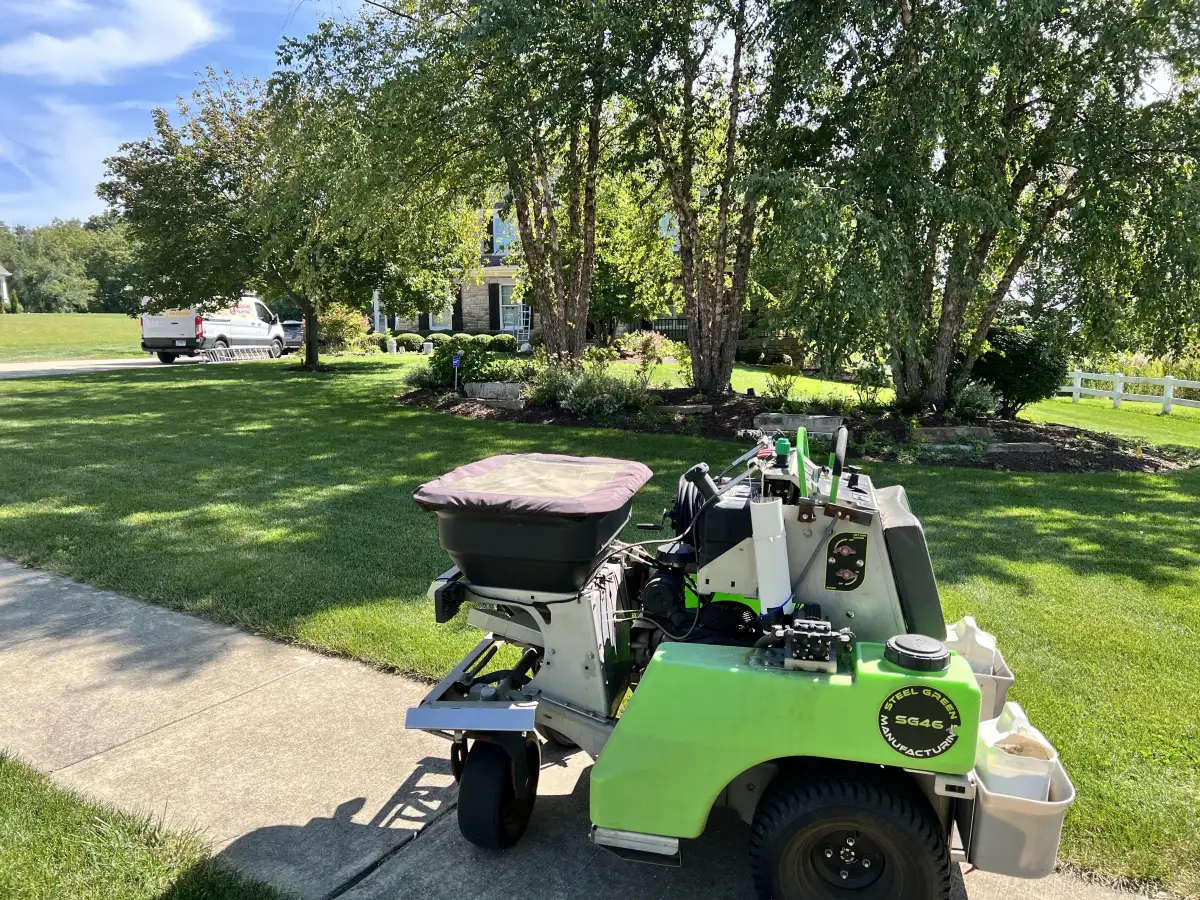
Core Aeration & Overseeding for Thicker, Healthier Lawns
Professional core aeration and overseeding in Aurora, IL starting at $75 for an average residential lawn. We reduce soil compaction, improve root depth, and fill in thin spots with premium grass seed — all timed to the Fox Valley growing season for maximum results.
Break Up Compacted Soil and Let Your Lawn Breathe
Core aeration and overseeding in Aurora, IL typically costs $75 to $200 for an average residential lawn of 5,000 to 8,000 square feet. The final price depends on your yard's size, soil conditions, and whether you add overseeding to the service. We provide a free on-site estimate before any work begins so you know the exact cost upfront.
Core aeration is the process of mechanically removing small plugs of soil from your lawn to relieve compaction. In the Fox Valley, where heavy clay soils are the norm, compaction is one of the most common reasons lawns struggle to thrive. When soil gets packed down by foot traffic, mowing, and weather, it chokes off the pathways that roots, water, and nutrients need to reach the root zone.
Our commercial-grade aerator pulls 2- to 3-inch cores at regular intervals across your entire lawn. These cores break down naturally over 1 to 2 weeks, returning organic matter to the soil surface. The holes left behind allow oxygen, water, and fertilizer to penetrate deeper into the root zone, which encourages stronger root growth and a thicker, more resilient turf.
For most Aurora-area lawns, aeration takes 30 to 60 minutes. The soil plugs on the surface may look messy for a few days, but they decompose quickly and actually contribute beneficial nutrients back into the lawn as they break down.
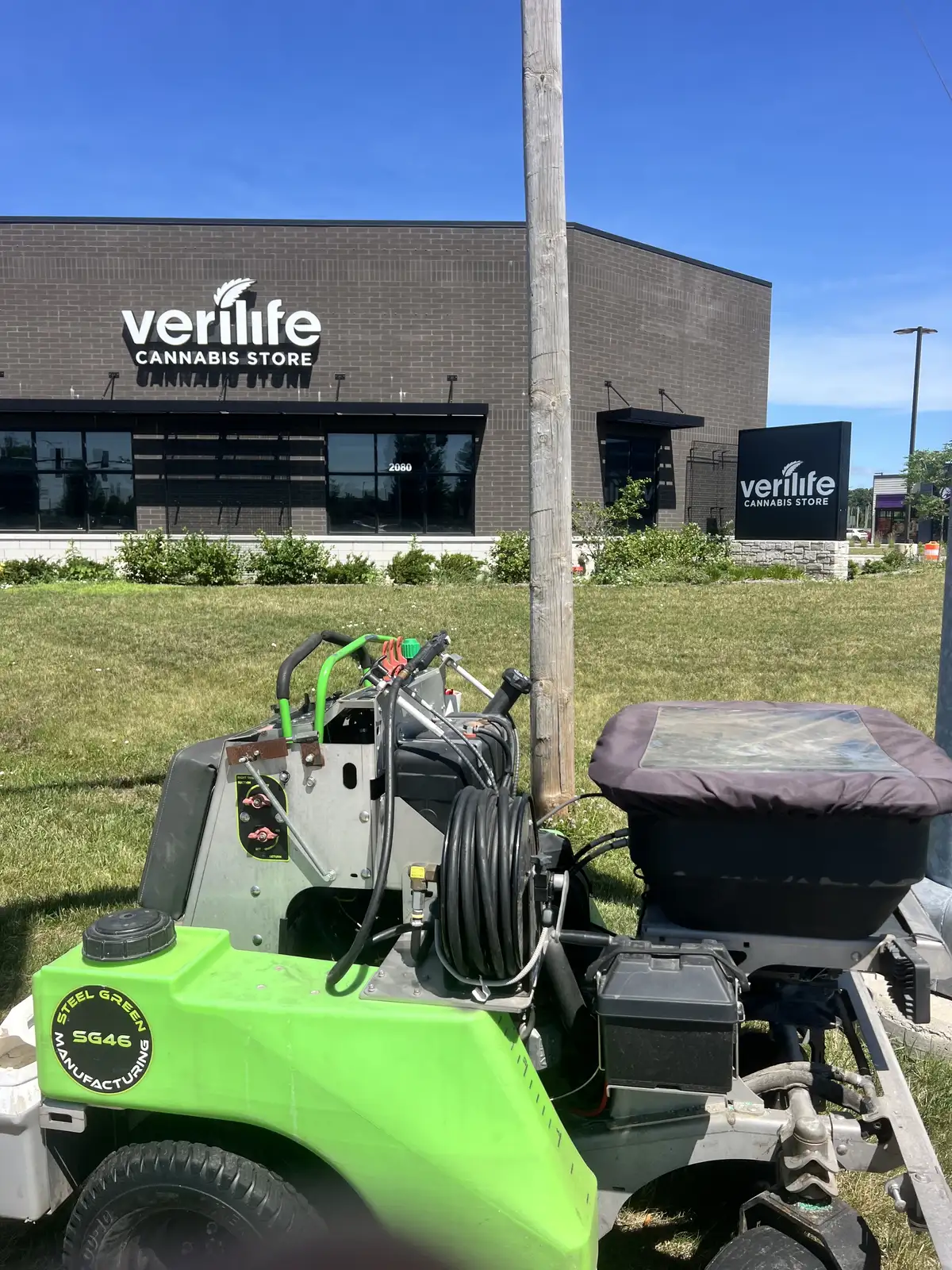
Fill in Thin Spots and Build a Denser, Weed-Resistant Lawn
Overseeding is the process of spreading new grass seed directly into your existing lawn without tearing up the turf. When paired with core aeration, the freshly pulled holes give the new seed direct contact with the soil below the thatch layer, which dramatically improves germination rates compared to broadcasting seed onto an un-aerated surface.
We use premium cool-season grass seed blends specifically selected for the Fox Valley climate. Kentucky bluegrass, turf-type tall fescue, and perennial ryegrass are the dominant species in Kane County, and our seed mixes are formulated to match the existing grass types on your property while improving disease resistance and drought tolerance.
A denser lawn is your best natural defense against weeds. When turf is thick and healthy, there is simply less bare soil available for weed seeds to take root. Many homeowners who have struggled with persistent weed problems find that a single aeration and overseeding treatment makes a visible difference within 3 to 4 weeks as the new grass fills in thin areas.
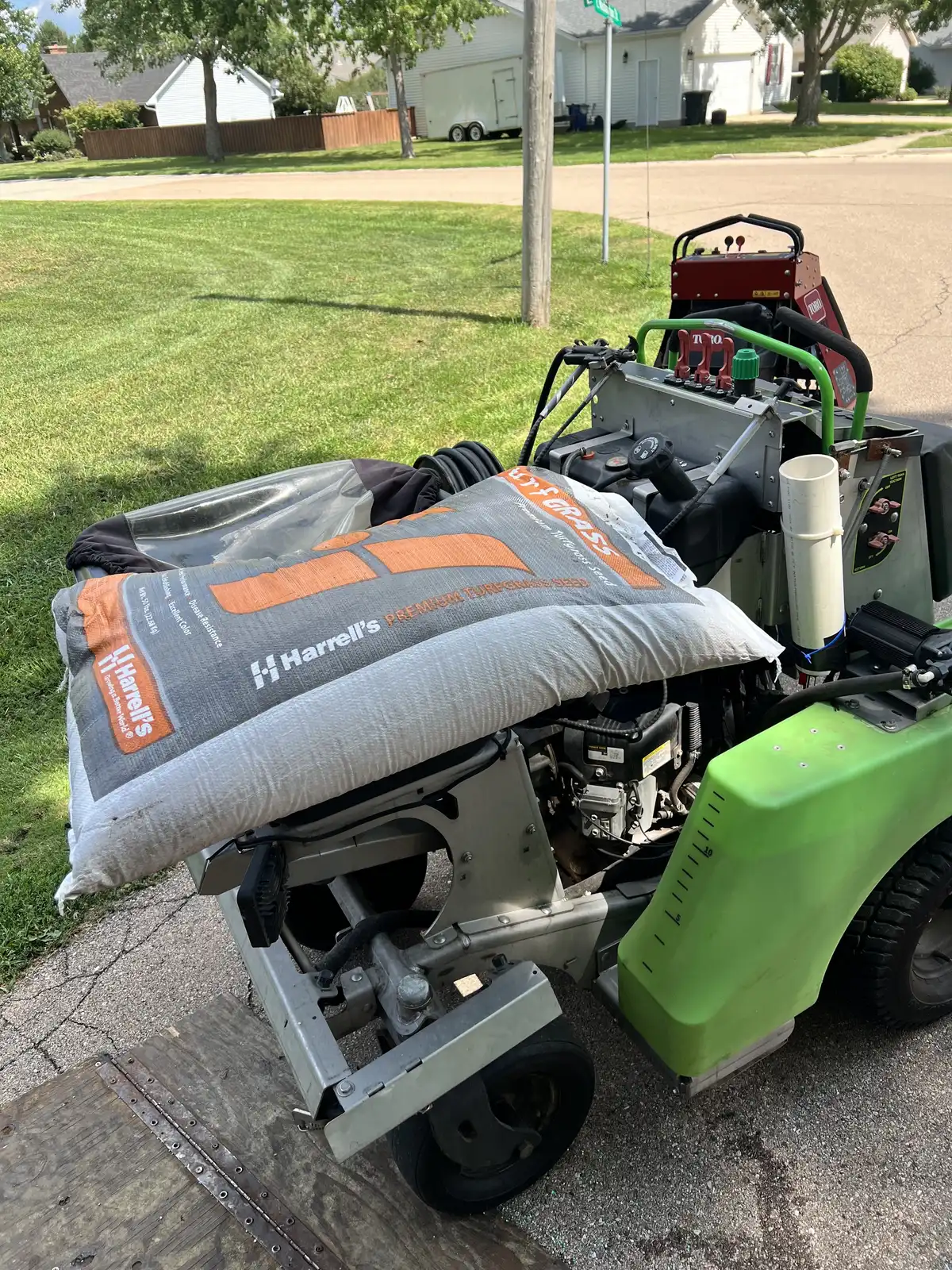
When to Aerate and Overseed in Illinois
Timing is critical for aeration and overseeding in the Fox Valley. Doing it at the wrong time of year wastes money and can even damage your lawn. Here is the Illinois-specific schedule we follow.
Fall: The Ideal Window
Late August through mid-October is the best time for aeration and overseeding in Aurora. Soil temperatures between 50 and 65 degrees Fahrenheit create ideal conditions for cool-season grass seed germination. The new seedlings get 6 to 8 weeks of favorable growing conditions before the first hard frost, and they face far less weed competition than spring-planted seed.
Spring: Aeration Only
If your lawn is heavily compacted, spring aeration (April through May) can still be beneficial. However, we generally do not recommend spring overseeding because crabgrass pre-emergent herbicides, which most Fox Valley lawns need, will prevent new grass seed from germinating. If you need both weed control and overseeding, fall is the way to go.
How Often?
We recommend annual core aeration for most residential lawns in the Aurora area. Homes built on heavy clay soils, properties with high foot traffic, and lawns that receive regular mowing all develop compaction that needs to be addressed yearly. Overseeding can be done annually or every other year depending on your lawn's density and condition.
Our Aeration & Overseeding Process
Every aeration and overseeding job follows the same proven process to ensure consistent, professional results across every property we service.
Free Property Assessment
Rick visits your property to evaluate soil conditions, identify compaction zones, assess turf density, and determine the best seed blend for your existing grass types. You receive a detailed estimate with no obligation.
Pre-Service Prep
We send a route ETA notification before arrival. For best results, we ask that you water the lawn 1 to 2 days before your appointment to soften the soil, and mow the grass slightly shorter than normal to improve seed-to-soil contact.
Core Aeration
Our commercial-grade aerator makes multiple passes across your lawn, pulling 2- to 3-inch cores at consistent intervals. We pay special attention to high-traffic zones, slopes, and areas near driveways and sidewalks where compaction is typically worst.
Overseeding
Immediately after aeration, we broadcast premium grass seed at the recommended rate for your lawn's specific conditions. The freshly pulled cores provide ideal seed-to-soil contact, and the aeration holes act as natural seed beds that protect seedlings from wind and foot traffic.
Post-Service Report
You receive a detailed service report with photos, products applied, seed type and rate, and specific watering instructions for the next 2 to 3 weeks. Proper watering after overseeding is critical for germination, and we provide a clear schedule so you get the best results.
Benefits of Aeration & Overseeding
Aeration and overseeding are two of the highest-impact lawn care services available. Here is what they do for your property when done correctly and at the right time.
Reduced Soil Compaction
Core aeration physically breaks up compacted clay, which is the dominant soil type in Kane County. Looser soil allows roots to grow deeper and stronger, which makes your lawn more drought-resistant and resilient.
Better Water Absorption
Aeration holes allow rainwater and irrigation to penetrate the soil instead of running off the surface. This means less water waste, fewer puddles, and more moisture reaching the root zone where it is needed most.
Thicker Turf Density
Overseeding introduces new grass plants into thin or bare areas, increasing your lawn's overall density. A denser lawn crowds out weeds naturally and looks noticeably fuller within 3 to 4 weeks of germination.
Improved Fertilizer Uptake
When soil is compacted, fertilizer sits on the surface and washes away with rain. After aeration, nutrients penetrate directly to the root zone, which means you get more value from every fertilizer application and better overall lawn health.
Thatch Reduction
The aeration cores pulled from the soil contain microorganisms that help break down the thatch layer on your lawn's surface. Excessive thatch (over half an inch) blocks water and nutrients from reaching roots, and aeration is the most effective way to manage it.
Disease Resistance
Modern grass seed varieties have been bred for improved resistance to common Illinois lawn diseases like dollar spot, brown patch, and leaf spot. Overseeding gradually introduces these improved genetics into your existing lawn over time.
Aeration & Overseeding FAQ
Yes, you can walk on your lawn immediately after aeration. The soil plugs on the surface may look messy, but they are harmless and will break down within 1 to 2 weeks. However, if overseeding was performed, we recommend limiting heavy foot traffic for the first 2 to 3 weeks to give new seedlings the best chance to establish.
With proper watering, you should see new grass seedlings emerging within 7 to 14 days after overseeding. Perennial ryegrass germinates fastest (5 to 10 days), followed by tall fescue (10 to 14 days) and Kentucky bluegrass (14 to 21 days). The lawn will look noticeably thicker within 3 to 4 weeks. Full establishment takes about 6 to 8 weeks.
Yes, watering is critical after overseeding. We recommend light watering twice daily (morning and early afternoon) for the first 2 to 3 weeks to keep the top half-inch of soil consistently moist. Once seedlings are 2 inches tall, transition to deeper, less frequent watering to encourage root growth. We provide a detailed watering schedule with every overseeding service.
No. Most broadleaf weed killers and pre-emergent herbicides will harm or kill new grass seedlings. We recommend waiting at least 4 to 6 weeks after overseeding before applying any herbicide, and at least 8 weeks before applying pre-emergent products. This is one reason we recommend fall overseeding — by the time spring pre-emergent season arrives, the new grass is fully established and unaffected.
Pair Aeration with a Full Turf Management Program
Aeration and overseeding deliver the best results when combined with a consistent fertilization and weed control program. Better Turf & Snow offers season-long turf management plans that include all the applications your Aurora lawn needs to stay thick, green, and healthy from spring through fall. Call Rick today to discuss a complete plan for your property.