
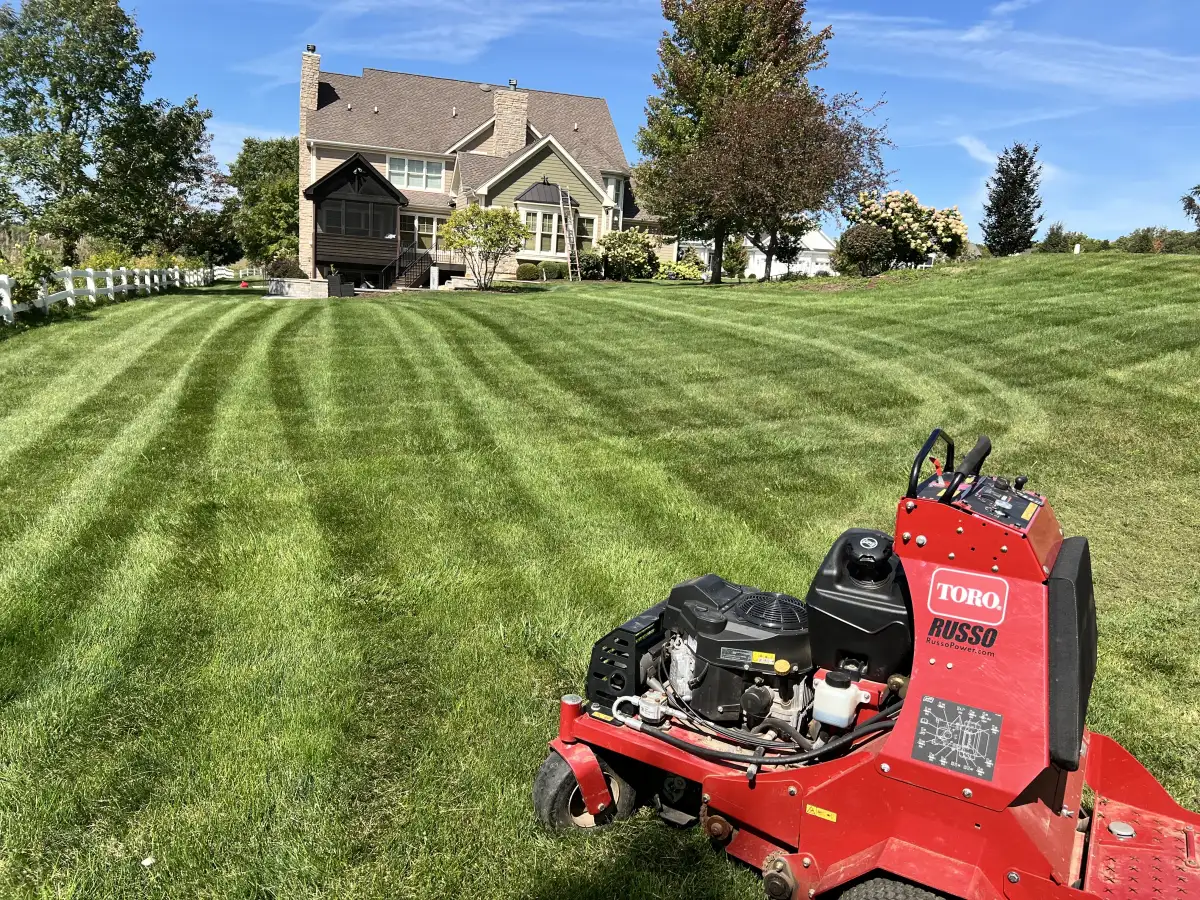
Many Aurora homeowners start comparing turf management after the lawn stops responding to quick fixes. A fertilizer visit may improve color for a few weeks, but crabgrass, clover, dandelions, thin turf, and hard soil often return when the deeper cause is not addressed. A better conversation starts with questions about timing, soil, turf density, weed pressure, and how the property is used through the season.
Better Turf & Snow works with lawns across Aurora, IL and the surrounding Fox Valley, where cool-season turf has to handle clay-heavy soil, freeze-thaw compaction, spring weed pressure, summer heat, and a narrow fall repair window. Before you book a program, these questions can help you decide whether a provider is selling routine lawn treatments or building a plan that fits your lawn.
The Foundation: Inspection and Seasonal Priorities
Turf management should be more complete than a list of fertilizer visits. Ask whether the program includes spring crabgrass prevention, balanced feeding, broadleaf weed control, soil health review, insect monitoring, and recommendations for aeration or overseeding when the lawn needs repair. The best answer should connect each service to the next step in the season.
For Aurora lawns, timing is especially important. Spring prevention helps stop crabgrass before it germinates. Late spring and early summer visits address broadleaf weeds while they are actively growing. Summer service notes should watch for heat stress, drought patterns, grub activity, and disease pressure. Fall is when compacted or thin lawns often need core aeration and overseeding so the lawn enters winter with better density.
Will You Look at the Lawn Before Recommending Treatments?
A useful turf estimate should start with the lawn's condition. Ask whether the provider looks at sunny areas, shaded turf, slopes, wet spots, driveway edges, pet-use areas, mower patterns, and thin patches before recommending a program. Two lawns on the same block can need different plans if one has compacted soil and the other has shade, drainage issues, or heavy foot traffic.
This is why Better Turf & Snow does not treat turf management as a one-size service. A lawn with good density and early weed pressure may need a strong fertilization and weed control schedule. A lawn that feels hard underfoot may need aeration before products can perform well. A lawn with open soil may need overseeding so desirable turf has a chance to crowd out weeds.
Prevention and Correction: Crabgrass and Broadleaf Weeds
Crabgrass is one of the most common reasons Aurora homeowners call for help. The right plan starts before crabgrass is visible, because pre-emergent treatment works when soil temperatures reach the right range for germination. Once crabgrass is established, control becomes more difficult and the lawn still needs density improvements to reduce future openings.
Broadleaf weeds tell a similar story. Dandelions, clover, plantain, and creeping charlie often spread where turf is thin or stressed. Ask how the program combines weed control with mowing height, fertility, watering guidance, and fall repair. A long-term turf program should make the lawn more competitive, not simply spray weeds after they appear. Homeowners dealing with recurring summer weed pressure can also review Better Turf & Snow's crabgrass treatment service.
Fall Recovery: Aeration and Overseeding
Aeration and overseeding are not automatically needed on every property, but they are important for many Fox Valley lawns. Core aeration opens compacted soil so oxygen, water, and nutrients can move into the root zone. Overseeding adds desirable grass seed where turf has thinned, which helps reduce open soil and gives the lawn a cleaner, thicker look over time.
Ask why aeration or overseeding is being recommended. If the lawn has hard soil, weak roots, recurring dry spots, or thin areas where weeds keep returning, fall repair may be a smart part of the plan. If the lawn already has strong density, the better recommendation may be a focused maintenance program. A clear estimate should explain the reason instead of adding services without context.
What Role Does Soil Health Play?
Aurora and nearby communities often have clay-heavy soil that can hold moisture after rain and become hard during dry periods. Newer or disturbed lawns may also have shallow topsoil, construction compaction, or uneven grading. Fertilizer can support growth, but turf still struggles when roots cannot move through the soil or use water evenly.
Ask whether the company evaluates compaction, drainage, and root-zone conditions. A soil health treatment recommendation may make sense when the lawn needs better nutrient uptake, stronger roots, and more consistent recovery after summer stress. Soil work is not a shortcut, but it can be the difference between repeated surface treatments and a stronger long-term turf stand.
How Will You Communicate After Each Visit?
Good turf management depends on communication. Ask what you will receive after an application. A helpful service note should tell you what was applied, whether the lawn needs watering, when pets and family can return to treated areas, and what conditions were noticed during the visit. It should also flag issues that might need homeowner attention, such as mowing too short, watering too lightly, or letting leaves sit too long in fall.
This matters because homeowners have a role in the results. Treatment timing helps, but mowing height, watering depth, pet traffic, shade, and cleanup habits also affect turf density. A provider that explains what is happening between visits gives you a better chance of seeing steady progress.
What Results Should I Expect in the First Season?
A healthy turf program can improve color, reduce weeds, and create a more even lawn, but timing depends on the starting condition. A lawn with moderate weeds and decent density may respond quickly. A compacted or patchy lawn may need several visits plus fall aeration or overseeding before the biggest gains appear.
Be cautious with promises that sound instant. Turf management is built around consistent improvement: cleaner spring growth, fewer summer weed openings, stronger roots, and better fall recovery. Ask what should improve in the first 30 to 60 days, what may take a full season, and what conditions could limit results if they are not corrected.
Do You Serve My Part of the Fox Valley?
Better Turf & Snow provides lawn care and turf management across Aurora and nearby communities including Oswego, Yorkville, Montgomery, Geneva, Batavia, North Aurora, and Plainfield. Explore the complete service area for additional Fox Valley coverage.
Homeowners west of Aurora can also read the dedicated guide to turf management in Oswego, IL. Oswego lawns often share the same Fox Valley weather pressures, but newer subdivisions, disturbed soils, grading, and drainage patterns can change how a turf program is planned.
FAQ: Complete Turf Management Programs
What should Aurora homeowners ask before booking turf management?
Ask whether the company inspects the lawn before quoting, how the program handles crabgrass and broadleaf weeds, whether soil compaction is reviewed, when aeration or overseeding may be recommended, and what communication you will receive after each visit.
Is turf management different from fertilization and weed control?
Yes. Fertilization and weed control are important parts of turf management, but a complete turf program also considers soil condition, root strength, mowing and watering habits, aeration, overseeding, pest pressure, and seasonal timing.
When is the best time to start turf management in Aurora?
Early spring is the best time to plan because crabgrass prevention and spring feeding are time-sensitive. Homeowners can still start later in the season to address active weeds, summer stress, grub risk, and fall repair planning.
Can turf management improve a thin Aurora lawn?
Often, yes. Thin turf may need a mix of fertilization, weed control, core aeration, overseeding, soil health treatment, grub prevention, and maintenance changes. The right recommendation depends on why the lawn is thin.
Does Better Turf & Snow provide turf management outside Aurora?
Yes. Better Turf & Snow serves Aurora and nearby Fox Valley communities including Oswego, Yorkville, Montgomery, Geneva, St. Charles, Sugar Grove, Batavia, Plano, North Aurora, and Plainfield.
Ready for a clearer lawn plan? Request a turf management estimate or call (630) 854-7511. Better Turf & Snow can review your Aurora-area lawn and recommend the right mix of turf management, weed control, soil health, aeration, and overseeding.